


Share This Article:
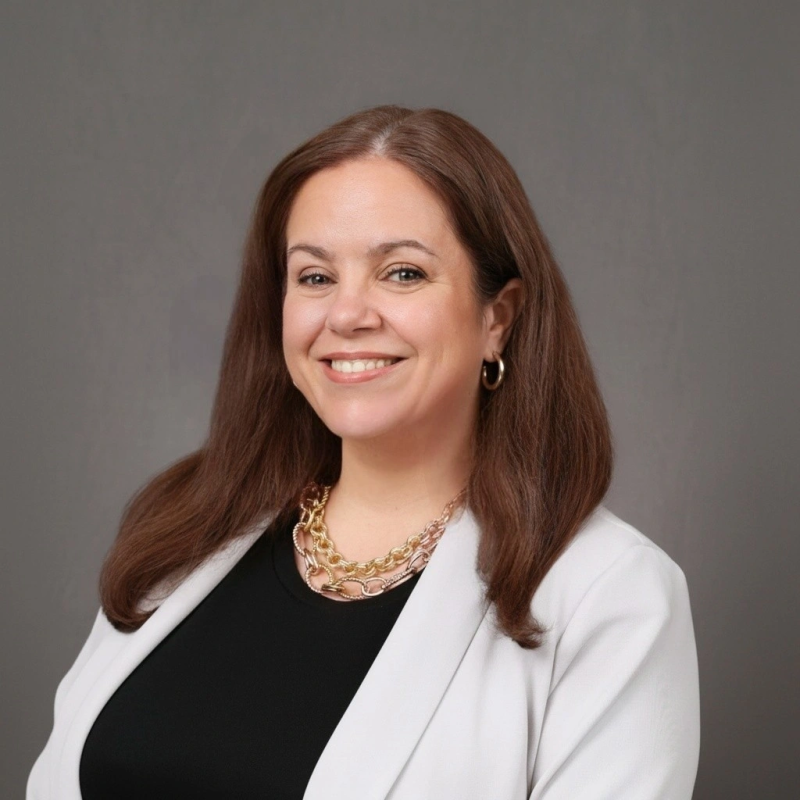
Lindsay Huffman has built her workers’ compensation career from two distinct vantage points: first as an attorney and now as a claims leader. She serves as Assistant Vice President of Workers’ Compensation for Amerisure and brings legal acumen, technical claims expertise, leadership experience, and a strong commitment to developing the professionals responsible for managing increasingly complex claims. Her career has included oversight of complex and catastrophic claims, operational strategy, third-party partnerships, compliance, analytics, training, and talent development.
Lindsay describes herself as a servant leader, and that philosophy comes through clearly in how she approaches claims. She believes the work demands accountability, sound judgment, and a willingness to understand how every decision affects the injured worker, employer, carrier, and overall direction of the claim. Her legal background gives her a strong foundation for strategy and analysis while her leadership experience has shown her how communication, relationships, and organizational expectations influence what actually happens in practice.
At the CLM Claims College School of Workers’ Compensation, Lindsay brings students a perspective grounded in both technical expertise and the realities of leading people through complicated work. She wants claims professionals to understand the rules and develop confidence in their ability to interpret incomplete information, ask better questions, communicate with clarity, and make decisions with purpose. For Lindsay, excellent claims handling requires professionals to remain aware of both the file in front of them and the person whose life has been interrupted by it.
What originally drew you to workers’ compensation?
Like many people in the industry, I am not sure I can say I deliberately chose workers’ compensation. It might have chosen me.
I began my career as an attorney and quickly discovered that workers’ compensation brought together many things I find meaningful: complex problem-solving, relationship building, strategy, and the opportunity to make a difference in someone’s life.
No two claims are alike. The work continually challenges us to consider legal, medical, financial, and human factors while determining the best path forward.
That complexity is part of what has kept me engaged throughout my career.
What perspective do you bring to the School of Workers’ Compensation?
I bring the perspective of someone who has experienced workers’ compensation from two sides, first as an attorney and now as a claims leader.
That background allows me to connect legal strategy with the realities of claim handling, leadership, and relationships. I am passionate about developing claims professionals and leaders and helping them understand the impact their decisions have on the lives of injured workers.
Claims professionals need technical knowledge and they also need to understand how to lead with accountability and empathy.
Both influence the outcome.
Why does that expertise matter for today’s claims professionals?
Claims professionals are navigating greater complexity, higher expectations, evolving technology, and increasing pressure to respond quickly to customers.
Technical knowledge remains essential. Professionals also need sound judgment, clear communication, adaptability, and an understanding of how each decision affects the injured worker, employer, carrier, and overall claim outcome.
The strongest professionals know how to connect technical expertise with the human experience.
That connection becomes increasingly important as the work becomes faster and more complex.
What is one missed opportunity you regularly see within workers’ compensation?
Treating communication as a task rather than a strategy.
A timely and thoughtful conversation can build trust, prevent escalation, and help move a claim toward resolution. When communication is delayed, overly technical, or transactional, uncertainty fills the gap.
Uncertainty often creates frustration.
Proactive communication gives people greater clarity about what is happening, why it is happening, and what they can expect next. That makes communication an essential part of effective claim management.
What has professional experience taught you that a textbook never could?
A textbook can teach you the law, benefits, deadlines, and procedures. It cannot teach you judgment.
Judgment develops through experience. You learn it by having difficult conversations, making decisions with incomplete information, learning from mistakes, and recognizing when a claim requires curiosity rather than certainty.
Experience has also taught me that how we deliver a decision can be nearly as important as the decision itself.
People may not always like the answer. They still deserve clarity, respect, and an understanding
of what happens next.
What do you hope students gain from learning with you at Claims College?
I hope students leave with practical knowledge they can use immediately and greater confidence in their own judgment.
I want them to ask better questions, recognize the impact of their decisions, and approach claims with curiosity and purpose.
Claims professionals make important decisions every day. Developing confidence means knowing how to think through the information in front of you and continuing to ask questions when something does not make sense.
Complete this sentence: “Excellent claims professionals understand that…”
Every file contains both a claim to manage and a person whose life has been disrupted, and doing the job well requires us to never lose sight of either.
The file demands technical knowledge, financial stewardship, and disciplined decision-making. The person requires communication, clarity, and respect.
Strong claim handling keeps both in view.
What advice would you give someone building a career in workers’ compensation?
Learn the fundamentals, but do not stop there.
Stay curious. Seek out mentors. Volunteer for special projects and ask to understand the “why” behind decisions.
Build strong relationships across every part of the industry because workers’ compensation truly is a community.
The people you learn from and work alongside will shape your career in ways you cannot always predict at the beginning.
What might Claims College students enjoy knowing about you?
I started college as a vocal performance major. The stage looks a little bit different now.
Ready to Head Back to Claims School?
The strongest claims professionals never stop learning. Join the workers’ compensation community in Baltimore from September 9–11, 2026, for the CLM Claims College and three days of practical education, meaningful discussion, and professional connection. The School of Workers’ Compensation gives students the opportunity to strengthen technical knowledge, sharpen professional judgment, and learn directly from experienced industry leaders. Each class is designed to help professionals return to their organizations with greater confidence and new ideas they can apply to their work. Explore the School of Workers’ Compensation and reserve your seat at Claims College today.
The CLM Claims College School of Workers’ Compensation is powered by Paradigm. WorkersCompensation.com proudly sponsors the School’s study halls.


AI best practices california case file caselaw case management case management focus claims compensability compliance compliance corner courts do you know the rule employers exclusive remedy florida fraud glossary check Healthcare hr homeroom insurance insurers iowa kentucky leadership NCCI new jersey new york ohio pennsylvania Safety safety at work state info tech technology the case manager violence WDYT what do you think women's history women's history month workers' comp 101 workers' recovery Workplace Safety Workplace Violence
Read Also
About The Author
About The Author
- WorkersCompensation.com
More by This Author
- Oct 11, 2026
- WorkersCompensation.com
- Oct 10, 2026
- WorkersCompensation.com
- Oct 10, 2026
- WorkersCompensation.com
Read More
- Oct 12, 2026
- Claire Muselman
- Oct 12, 2026
- Anne Llewellyn
- Oct 12, 2026
- Claire Muselman
- Oct 11, 2026
- Frank Ferreri
- Oct 11, 2026
- Anne Llewellyn
- Oct 10, 2026
- Claire Muselman