


Share This Article:
Glossary Check
In workers' compensation, indemnity refers to the cash benefits paid to an injured worker to replace lost wages or compensate for a permanent loss of earning capacity resulting from a work-related injury or illness.
It is distinct from medical benefits, which cover treatment expenses such as doctor visits, surgeries, medications, and physical therapy.
Types of Indemnity Benefits
Most states provide several categories of indemnity benefits:
| Benefit Type | Purpose |
|---|---|
| Temporary Total Disability (TTD) | Paid when the worker cannot work at all for a temporary period. Often a percentage of the worker's average weekly wage. |
| Temporary Partial Disability (TPD) | Paid when the worker returns to work but earns less because of injury-related restrictions. |
| Permanent Partial Disability (PPD) | Compensation for a permanent impairment when the worker retains some ability to work. |
| Permanent Total Disability (PTD) | Benefits for workers who are permanently unable to engage in gainful employment. |
| Death Benefits | Indemnity payments to eligible dependents after a fatal workplace injury. |
Example
Suppose a worker earned $1,200 per week before an injury.
- The state's compensation rate is 66⅔% of the average weekly wage.
- The worker is unable to work for 10 weeks.
The indemnity benefit would generally be:
$1,200 × 66⅔% = $800 per week
The worker would receive approximately $8,000 in indemnity benefits over the 10-week disability period, subject to any state maximums or waiting periods.
How Claims Professionals Use the Term
Workers' compensation adjusters often separate a claim into:
- Medical exposure = expected treatment costs
- Indemnity exposure = expected wage-loss and disability payments
- Expense exposure = litigation, IME, vocational, and other claim costs
So if an adjuster says a claim has "high indemnity exposure," they usually mean the injured worker is expected to miss significant time from work, have permanent impairment, or receive substantial disability benefits.
Simple Definition
Indemnity = money paid directly to the injured worker (or dependents) for lost wages, disability, or death benefits under the workers' compensation system. Medical treatment payments are generally tracked separately from indemnity benefits.
In workers' compensation, "indemnity" is one of those foundational terms that appears everywhere in claims handling, reserving, hearings, and carrier reports. Once you remember that it essentially means lost-wage and disability compensation paid to the worker, many claim documents become much easier to read.
A quick rule of thumb for adjusters and attorneys:
- Medical = payments to healthcare providers
- Indemnity = payments to the injured worker (or dependents)
- Expenses = litigation, IMEs, vocational services, surveillance, nurse case management, etc.
You'll often see claim summaries such as:
| Category | Amount |
|---|---|
| Medical Paid | $42,000 |
| Indemnity Paid | $18,500 |
| Expenses Paid | $3,200 |
In that example, the worker personally received the $18,500 in indemnity benefits.
Takeaway
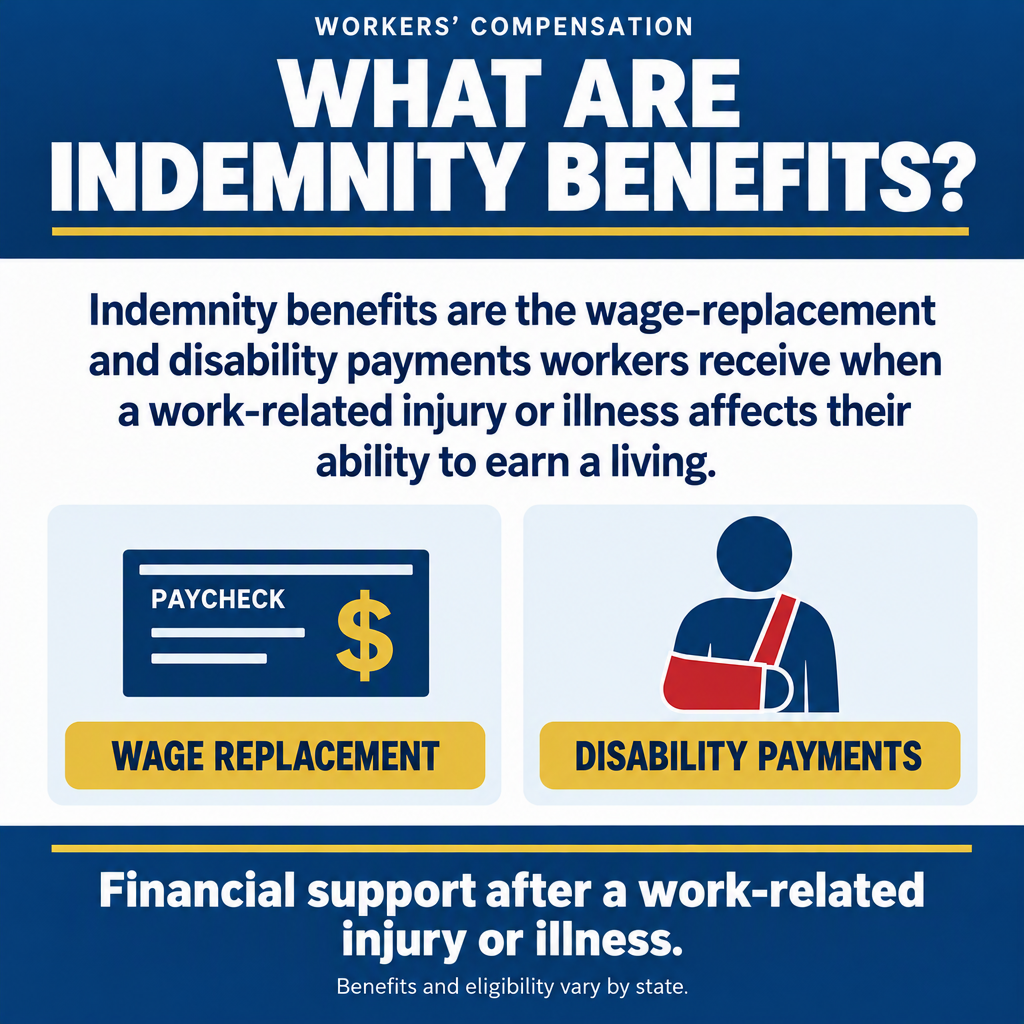
Indemnity benefits are the wage-replacement and disability payments workers receive when a work-related injury or illness affects their ability to earn a living.


AI best practices california case file caselaw case management case management focus claims compensability compliance compliance corner courts do you know the rule employers exclusive remedy florida fraud glossary check Healthcare hr homeroom insurance insurers iowa kentucky leadership NCCI new jersey new york ohio pennsylvania Safety safety at work state info tech technology the case manager violence WDYT what do you think women's history women's history month workers' comp 101 workers' recovery Workplace Safety Workplace Violence
Read Also
- Nov 18, 2026
- WorkersCompensation.com
- Nov 16, 2026
- WorkersCompensation.com
- Nov 13, 2026
- WorkersCompensation.com
About The Author
About The Author
- WorkersCompensation.com
More by This Author
- Nov 18, 2026
- WorkersCompensation.com
- Nov 16, 2026
- WorkersCompensation.com
- Nov 13, 2026
- WorkersCompensation.com
Read More
- Nov 18, 2026
- WorkersCompensation.com
- Nov 16, 2026
- WorkersCompensation.com
- Nov 13, 2026
- WorkersCompensation.com
- Nov 12, 2026
- Evan Swan
- Nov 12, 2026
- NCCI
- Nov 10, 2026
- Cameron Hannum