


Share This Article:
Communication, Finding ‘Why’ Top Tipsters’ List of how to Improve Workers’ Comp
07 Oct, 2026 Frank Ferreri
Conference Insights
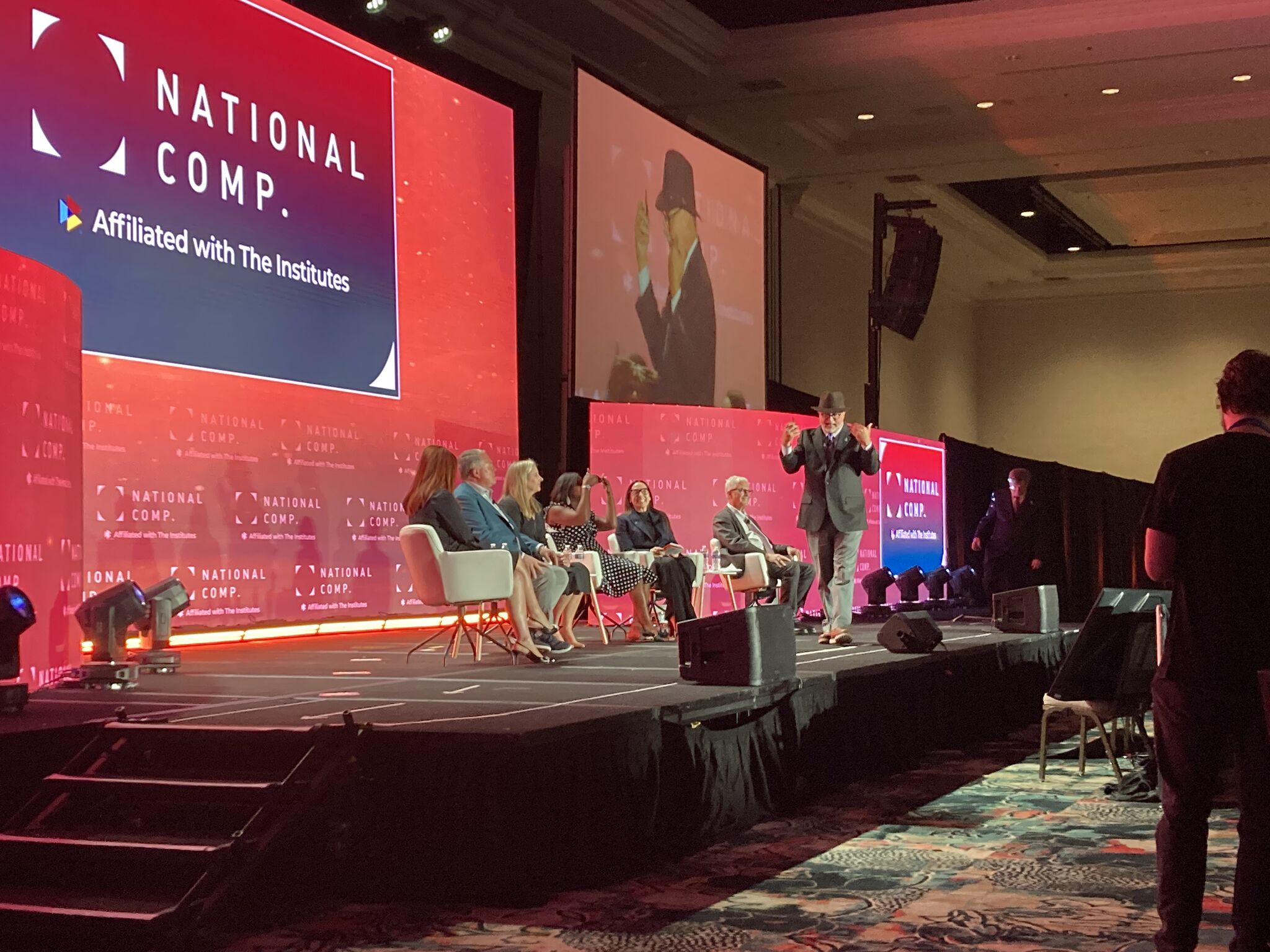
If you get a panel of workers' compensation experts on stage, offer them drinks, and ask them to deliver chunks of strategy in one-minute bites, what do you get? SIPS and TIPS at National Comp, a setting where, among other things Stuart Colburn, Denise Algire, Mark Walls, Jennifer Cogbill, Porcha Gillespie, Dr. Jill Rosenthal, and Judge Robert Rassp focused on what to say and where to find motivation in getting workers back on the job.
Here are a few highlights from their "60 Tips in 60 Minutes" presentation.
Communication
While Algire emphasized that communication with an injured worker should be empathetic, Walls pointed out the importance of timeliness in communicating with all stakeholders.
"If your adjusters aren't responding timely to people who pay the claims, what do you think they're doing with providers?" he said. "Answer the phone."
Cogbill said that setting the tone early in a claim can shape its outcome.
"Return-to-work really happens before the injury," she said. "The more we can place up front, the less we'll have delays."
Colburn pointed out that the right words at the right time can mean the difference between a smooth claim and a claimant lawyering up.
"Treat your employees with dignity and respect, or they will find a plaintiffs' attorney who will," he said.
Teamwork Makes the Claim Work
Cogbill pointed out that employees do better when they know someone's on their side.
"The way we show up for injured workers is where we set the tone early," she said. "Let the employee know we're going to partner with them."
Rassp suggested that some biases need examining. For example, the tendency to think that claims are fabricated or exaggerated by workers seeking to game the system doesn't hold up to real-world evidence.
"Dollar for dollar, there's more employer fraud than worker fraud, so right away, get to what happened first, and what was the mechanism of injury" to build the facts of the claim, he said.
With knowledge of the injury in mind, Gillespie said light duty opportunities can go a long way to help employees feel that they're still part of a team.
"It lets them know, 'Hey, there's a space for me; I can get back to my coworkers,'" she said.
Similarly, Rosenthal noted that having the right people with the right training can improve the team dynamic on a worker's journey back to the job.
"Having someone trained is critical," she said, regarding occupational medical specialists who understand causation and return-to-work. "They need to be trained to be engaged with the employer."
Likewise, Rosenthal highlighted the need to get the right people working on a workers' recovery.
"Expediting access to specialists gets people back to their jobs, their normal lives," she said. "It gets their families back to their normal lives."
Remember the 'Why'
It can be easy to get bogged down in the fight of a workers' compensation claim, but the panel advised that doing so really ends up just wasting time and money -- and keeping a worker from getting back to work.
"It's always petty disputes," Walls said. "On a $1 million claim, why are you going to deny a $30 heating pad. Pick your battles and keep the claim moving."
Gillespie agreed, noting that what's right and what's required can often be different things.
"We end up disputing something because we can, not because we should," she said. "So, let's say there's an employee who wants an EKG to know if he's okay. Should we approve it even though it wasn't prescribed? The question we need to be asking is, 'Will my employee be okay?'"
Algire noted that in a world where people expect immediate gratification -- think Amazon and DoorDash -- responsiveness is controllable and a little humanity can be a meaningful investment.
"The human touch can resolve issues automation just can't," she said. "Pick up the phone: How are you? What's pushing you to return to work?"
And when the answer is "no," Algire advised that the need for a real human connection is even deeper.
"It's soft landings," she said. "When you tell an employee it's not compensable, the claim doesn't go away, so explain to the employee in laymen's terms, and connect them to resources."
Ultimately, though, what motivates all of us, injured workers included, is our "why," Rosenthal said.
"Look at the whole person," she said. "What are their hobbies? What are their social determinants of health? Do they face food insecurity?"
In looking at how to care for a patient so that they heal faster, Rosenthal said she looks for what drives people to want to get back to their lives.
"What's their 'why'?" she said. "For me, it's my four children, but it could be playing music, it could be they want to go fishing; it's whatever makes them want to get better."
Knowing what makes someone want to get better is a powerful tool to getting people back on the job and back to their lives.
"I know you love this, so let's get you there," Rosenthal said.


AI best practices california case file caselaw case management case management focus claims compensability compliance compliance corner courts do you know the rule employers exclusive remedy florida fraud glossary check Healthcare hr homeroom insurance insurers iowa kentucky leadership NCCI new jersey new york ohio pennsylvania Safety safety at work state info tech technology the case manager violence WDYT what do you think women's history women's history month workers' comp 101 workers' recovery Workplace Safety Workplace Violence
Read Also
About The Author
About The Author
-
Frank Ferreri
Frank Ferreri, M.A., J.D. covers workers' compensation legal issues. He has published books, articles, and other material on multiple areas of employment, insurance, and disability law. Frank received his master's degree from the University of South Florida and juris doctor from the University of Florida Levin College of Law. Frank encourages everyone to consider helping out the Kind Souls Foundation and Kids' Chance of America.
More by This Author
- Oct 05, 2026
- Frank Ferreri
- Oct 04, 2026
- Frank Ferreri
Read More
- Oct 06, 2026
- Claire Muselman
- Oct 06, 2026
- Chriss Swaney
- Oct 05, 2026
- Claire Muselman
- Oct 05, 2026
- Frank Ferreri
- Oct 04, 2026
- Claire Muselman
- Oct 04, 2026
- Chris Parker