


Share This Article:
Conference Recap
Return-to-work does not begin when an injured worker is medically released to return to the job. It begins in the first hours and days after an injury, when trust, communication, and expectations are established.
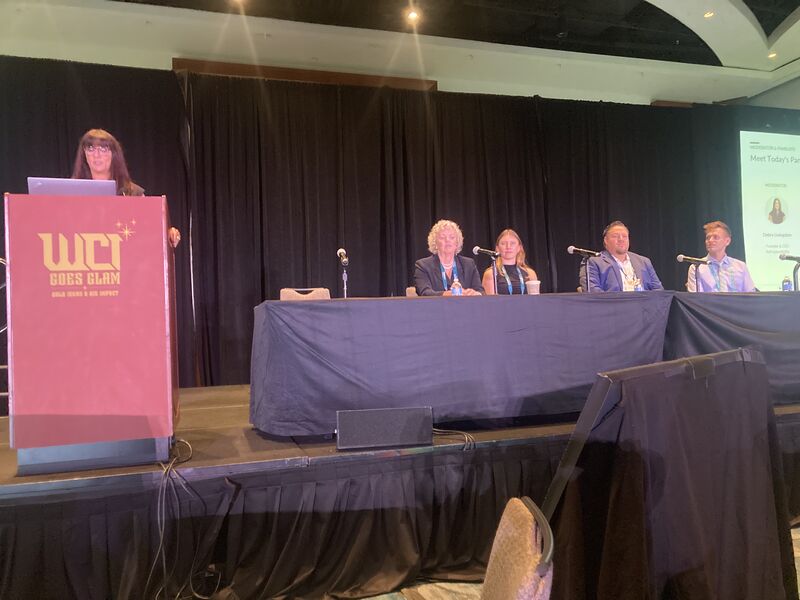
Debra Livingston of ReEmployAbility, Karen Thomas of CorVel, Emily Cameron of Crosstie, Zachariah Bamfield of Sysco, and Andrew Bloom of Kind Souls Foundation told a WCI audience that RTW should be a guiding point from the start of a claim, not just a destination.
Early Days, Missed Opportunities
The panel noted that as soon as a worker's injured on the job, everyone involved in a claim has a chance to set the tone for the entire workers' compensation experience the worker encounters.
"The biggest disconnect is missing the opportunity to build trust in the first 30 days," Thomas said. "That's where the injured worker is looking at us and asking what we're doing to support them."
Cameron agreed, and advised making sure an injured worker knows that they are seen and heard.
"It's that validation step," she said.
For Bloom, the problem for claims professionals and employers alike is jumping to conclusions about an injured worker's intentions.
"We really get into trouble when we make assumptions for reasons for disengagement," Bloom said. "We live and breathe this stuff, but their life has done a 180 just from something that happened at work."
Livingston pointed out that the level of attention often depends on the type of injury, but all claims should receive the same level of interaction.
"You think about catastrophic cases, a team swoops in, but in 'run of the mill' cases, the experience is often different," she said.
So, what should the approach be?
Thomas suggested that the early stages of a claim are the perfect time to frame how the rest of the journey will go.
"You're engaging, setting the tone, and learning traits of the injured worker and their support system," Thomas said. "We need to make sure everyone who has a stake in the claim is on the same page."
Bamfield stressed that clear expectations are an important first step.
"Set them up for success, let them know what to expect, let them know what's to come," he said. "Let them know how they're going to get paid and instill in them that they will get first-class medical treatment."
Tech Helps
Livingston cited research showing that injured workers respond to text messages at an 80% rate to underline the point that technology presents a tool for keeping engagement up and lines of communication open.
According to Cameron, no one form of communication should dominate.
"Some people will spring to the phone, some will let it go to voicemail, and some will only respond to text, so you have to give them options," Cameron said. "We call that a multi-modal approach, and the benefit is that giving workers a choice also gives them a sense of control in their own claim."
Thomas shared that using technology in a way that focuses on what the injured worker needs keeps shows that the employer is on the worker's side.
"In that first 30 days, consistency builds engagement, which produces trust," Thomas said. "That's how you're going to get buy-in."
Bloom cited apps like Crosstie as a way to empower workers.
"So, there you have an app where, they can use it at 1:30 in the morning if they're up and losing sleep about something with their claim," he said.
What makes that important, according to Livingston, is that anxiety can knock a claim off track.
"Fear delays recovery," she said.
No Replacement for Human Interaction
While technology can help keep communication going with an injured worker, the panel emphasized that the worker has to feel that she matters as a person.
"We need to meet the injured person where they are," Thomas said. "It's got to be about the whole person."
Thomas also said that "whole person" means thinking about more than just the job.
"I really want to understand your life, what things you enjoy," she said. "When you focus only on RTW, it becomes adversarial because it looks like all you care about is productivity."
Bamfield encouraged supervisors to take a leadership role in helping injured workers feel like whole people and not just a file.
"It starts with the immediate supervisor, they need to reach out just to say, 'How are you doing?'" Bamfield said. "It lets them know they are part of the team, and when it comes from the employer rather than a vendor, it's way more powerful."
Cameron pointed out that litigation often emerges from communication breakdowns, something Bloom advised was well within the control of employers.
"The more we can do to let them know what the next 48 hours look like and the next after that, the better off everyone will be," he said. "It's that 'golden hour,' because in the first 60 minutes, there shouldn't be an ounce of disbelief or interrogation."
And with "Dr. Google" at everyone's fingertips, communication can mean the difference between good info and potential misinformation coming at an injured worker.
"They're probably going to ChatGPT to learn about their injury," Cameron said. "So, give them opportunities to get info how they need it, maybe that's outside of business hours, through portals to guide them through the process and the option to contact someone."
Bloom echoed the sentiment that one way or the other, an injured worker will find answers.
"They're going to fill the gap with assumptions, and it's the ones you want," he said. "So, if they're not going to hear from you for a while, that's okay, but let them know."
Getting Back to Life
Building on the human element, Bamfield noted that it's only natural for people to want to get back to what they're used to.
"We all want to fall back into our habits and norms, and when it's taken away, we feel fear and anxiety," he said. "So, let people know, hey, we're doing this to get you back to that norm you're used to."
Thomas stressed that focusing on the whole person doesn't mean going into parts of a worker's life that are outside of the workers' compensation system's capabilities.
"Being holistic doesn't mean we're buying more than the claim," she said. "Focus on what they can do, not what they can't."
Bloom explained that focus on the psychological aspects of any workplace injury can get a worker back quickly.
"There was a Sedgwick study that found that having a behavioral specialist come on in the first 90 days increases return to work by 72%," Bloom said. "You can have a compassionate workplace without creating liability, I promise you."
Successful claims management is not solely about moving an injured worker back to a job. It is about maintaining trust, reducing uncertainty, and keeping workers connected to both treatment and their workplace from the very beginning of the claim.
It's also about more than just work and ultimately, Livingston said that the goal is simple.
"We want to get you back to life."


AI best practices california case file caselaw case management case management focus claims compensability compliance compliance corner courts do you know the rule employers exclusive remedy florida fraud glossary check Healthcare hr homeroom insurance insurers iowa kentucky leadership NCCI new jersey new york ohio pennsylvania Safety safety at work state info tech technology the case manager violence WDYT what do you think women's history women's history month workers' comp 101 workers' recovery Workplace Safety Workplace Violence
Read Also
About The Author
About The Author
-
Frank Ferreri
Frank Ferreri, M.A., J.D. covers workers' compensation legal issues. He has published books, articles, and other material on multiple areas of employment, insurance, and disability law. Frank received his master's degree from the University of South Florida and juris doctor from the University of Florida Levin College of Law. Frank encourages everyone to consider helping out the Kind Souls Foundation and Kids' Chance of America.
More by This Author
Read More
- Oct 08, 2026
- Claire Muselman
- Oct 08, 2026
- Frank Ferreri
- Oct 08, 2026
- Claire Muselman
- Oct 07, 2026
- Frank Ferreri
- Oct 06, 2026
- Claire Muselman
- Oct 06, 2026
- Chriss Swaney