


Share This Article:
Opposition Increases against SCOTUS for Siding with Corporate America in Roundup Decision
26 Jun, 2026 Chriss Swaney
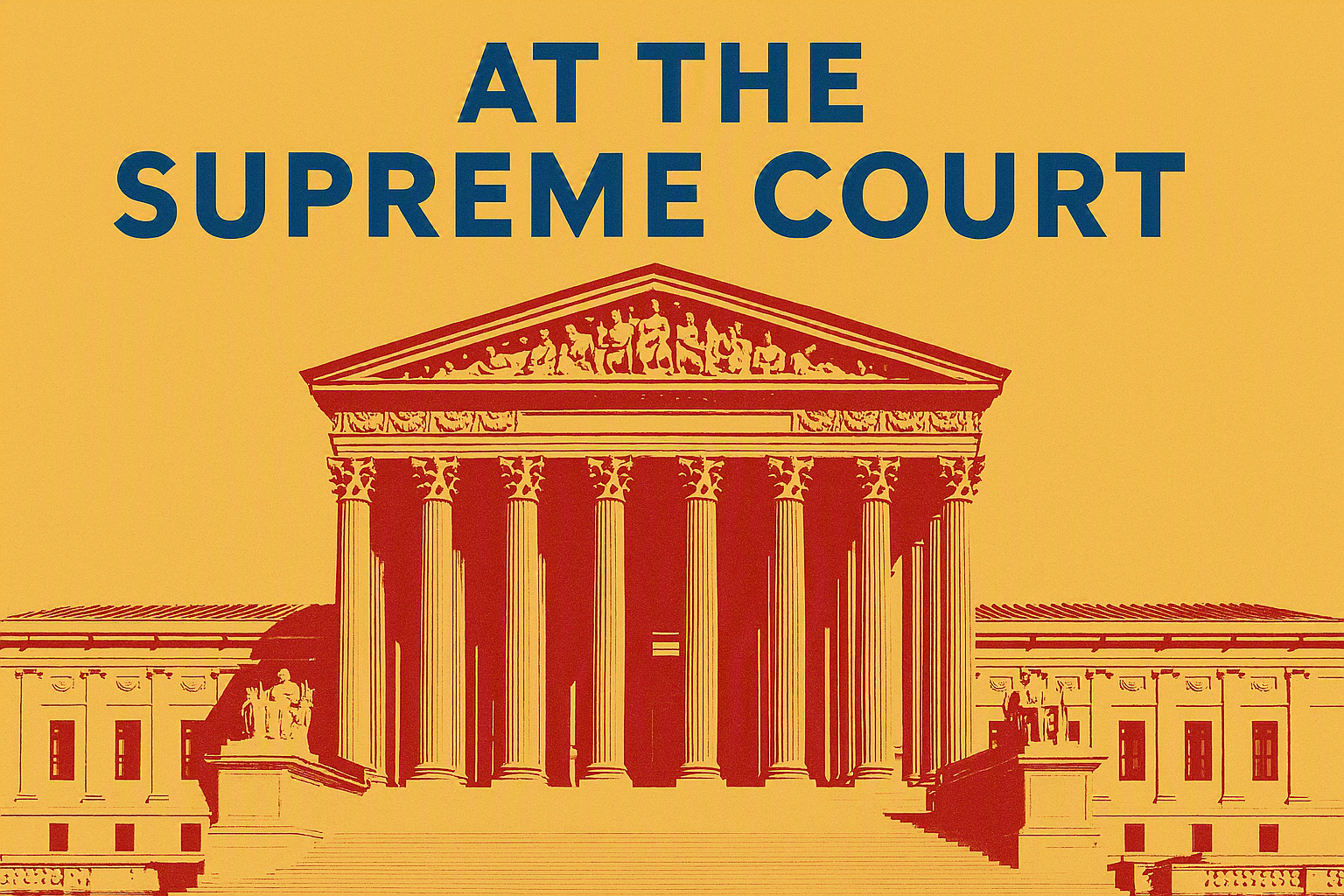
At the Supreme Court
The Supreme Court sided with the maker of Roundup weedkiller Thursday in a ruling that could block thousands of lawsuits alleging it failed to warn people the product could cause cancer.
Christopher A. Seeger, the proposed class counsel in the roundup settlement, said this Supreme Court ruling wrongly slams the courthouse door on Americans sickened by pesticides, and underscores why we negotiated a $7.25 billion settlement that guarantees compensation to roundup victims regardless of today’s decision.
“We urge those opposing this agreement, including the attorney who unsuccessfully argued Durnell, to drop their opposition so that tens of thousands of cancer victims no longer have to wait for justice after a decade of delay,’’ said Seeger
The case came before the justices after a tidal wave of litigation that included some multibillion-dollar verdicts against the global agrochemical manufacturer Bayer, which acquired Roundup when it bought its original manufacturer Monsanto in 2018.
The high court, in a 7-2 ruling, found that the company can’t be sued in state courts because federal regulations have found a cancer link unlikely and do not require a warning label.
The decision “is good for science, farmers, and industries that depend on regularity clarity for innovation,’’ Bayer said in a statement. “It should help significantly contain the roundup litigation after nearly a decade of battles.
But the controversy is far from over.
“This is a devastating blow in our fight to hold big pesticide companies accountable for the harm caused by toxic chemicals. It is terrible that the Trump administration convinced the Supreme Court to provide a liability shield to big corporations like Bayer, allowing them to poison us with impunity, ‘’ said Sen. Cory Booker of New Jersey.
Booker said he fought this decision tooth and nail in the courts and stood with the MAHA (Make America Healthy Again) on the Supreme Court steps to oppose it. “This is not a liberal vs. conservative or right vs. left issue – it is a right or wrong issue. Now, Congress must quickly act to reverse this liability shield,’’ said Booker.
The decision is a win for the Trump administration, but one that could be difficult politically since allies in the Make America Healthy Again movement want to rein in pesticide use.
“Clearly, we see the judicial branch of government folding into the executive branch and a segway into more health issues for Americans,’’ said Robert Strauss, a professor of economics and public policy at Carnegie Mellon University. “Just look at all the childhood disease we used to have under control like measles,’’ said Strauss. “These pesticides are permeating our vital food chain,’’ he added.
Though Bayer said the ruling should result in the dismissal of pending lawsuits containing failure-to-warn allegations, the company said it plans to proceed with a proposed $7.25 billion class -action settlement intended to resolve many of the remaining claims.
There’s still strong debate about cancer and Roundup’s key ingredient, glyphosate. The World Health Organization’s International Agency for Research on Cancer classified the chemical as “probably carcinogenic’’ in 2015.
But barn yards nationwide are filled with cheering farmers as they applaud the Supreme Court decision for Bayer. “This decision is a win for farmers and the broader agricultural community,’’ said Sam Kieffer, CEO of the National Association of Wheat Growers. “Farmers depend on clear, predictable, science-based regulations and continued access to effective crop protection tools,’’ Kieffer said.
“The general public does not understand the battle we have with insects destroying our crops. We need pesticides to keep them at bay,’’ said Mort Chambers, a wheat farmer in Greene County, Pa. “I applaud the Supreme Court; they saved my livelihood.’’ Chambers said.
The United States produces 50 million tons (around 1.9 to 2 billion bushels) of wheat annually. It ranks as the 4th largest wheat producer in the world, and is consistently the top global exporter of wheat, shipping 50 percent of its total crop worldwide each year.


AI best practices california case file caselaw case management case management focus claims compensability compliance compliance corner courts do you know the rule employers exclusive remedy florida fraud glossary check Healthcare hr homeroom insurance insurers iowa kentucky leadership NCCI new jersey new york ohio pennsylvania Safety safety at work state info tech technology the case manager violence WDYT what do you think women's history women's history month workers' comp 101 workers' recovery Workplace Safety Workplace Violence
Read Also
About The Author
About The Author
-
Chriss Swaney
Chriss Swaney is a freelance reporter who has written for Antique Trader Magazine, Reuters, The New York Times, U.S. News & World Report, the Burlington Free Press, UPI, The Tribune-Review and the Daily Record.
More by This Author
Read More
- Oct 25, 2026
- Claire Muselman
- Oct 25, 2026
- Chris Parker
- Oct 24, 2026
- Claire Muselman
- Oct 24, 2026
- Frank Ferreri
- Oct 24, 2026
- Claire Muselman
- Oct 23, 2026
- Claire Muselman