


Share This Article:
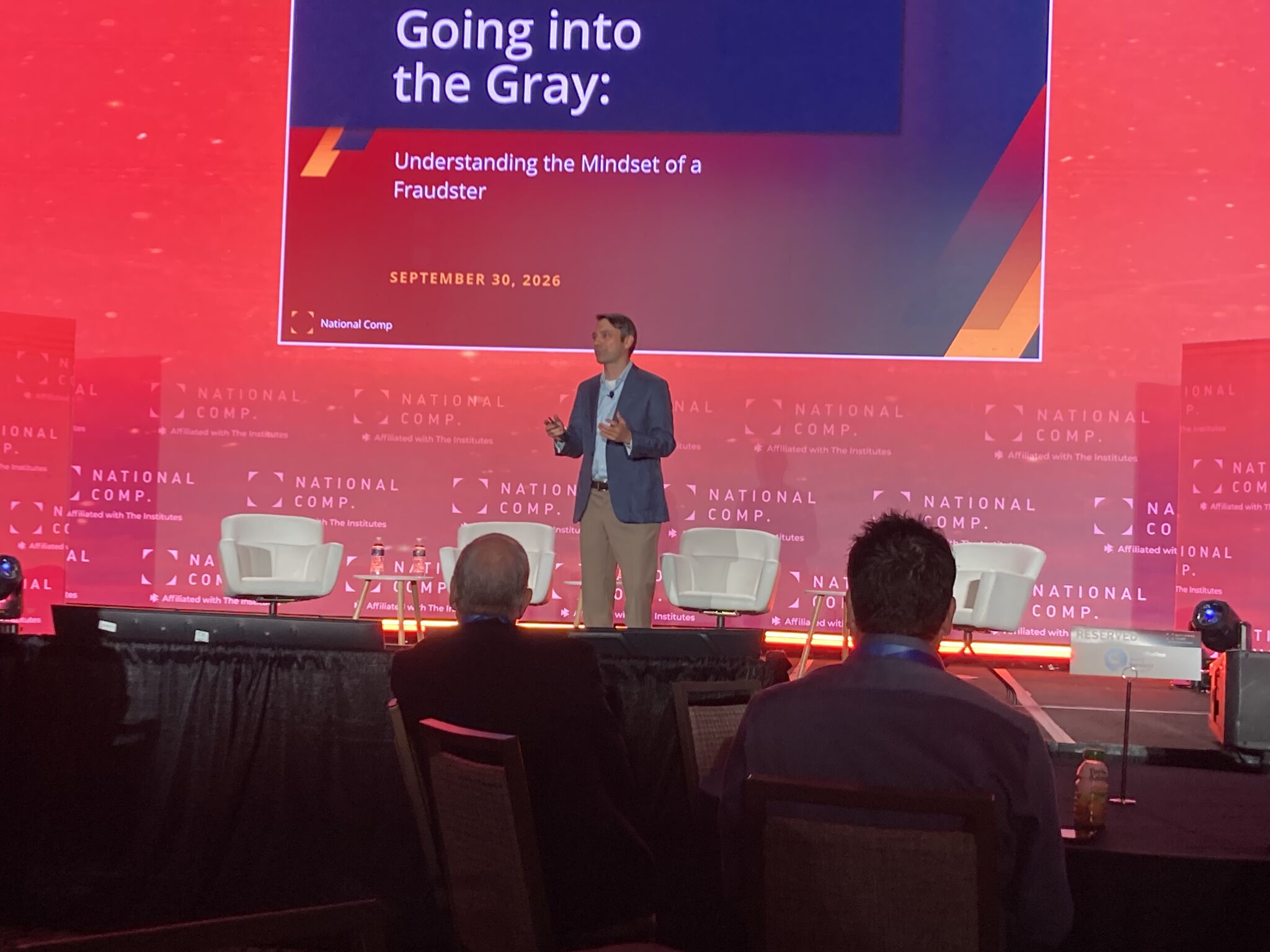
2 Springsteen Tickets vs. a Career? National Comp. Session Breaks Down why Fraud Happens
10 Oct, 2026 Frank Ferreri
Conference Insights
Picture it: You've reached the top of your field, you make great money, you have a great reputation, and you're doing the work you love. Then, the chance to offer up some insider trading tips presents itself, and in return, you get two tickets to a Bruce Springsteen concert, a watch, and an envelope of cash. All told, it's about $50,000 in value. Is it worth it?
As author and Harvard Business School professor Eugene Soltes told a National Comp audience, that's what KPMG's Scott London traded a lucrative position as a Senior Partner for in exchange for info he shared with one of his golf buddies. For Soltes, on the surface, it doesn't seem to make sense, but why it happens teaches about the way people think of what's "wrong" and "harmful."
What is 'Harm'?
"Why would he give it up?" Soltes said. "It's what he was not thinking of."
According to Soltes, white-collar crime thrives on a feeling that it really isn't harmful.
"If we take insider trading, we can't even say there's a victim to identify," Soltes said. "It's just the market."
Soltes raised an ethics class hypothetical, the "trolley problem" to illustrate his point.
In one case, you have the chance to choose which way an out-of-control trolley goes, so do you let it continue on its path where it will kill five people, or do you divert it so that it only kills one? Many people will take the utilitarian choice and flip the switch to sacrifice one person to benefit the five.
In another example, you can save the same five people but to do so, you have to push someone in front of the train to again sacrifice the one to save the five. Could you do it?
In the latter case, people typically have a harder time going utilitarian because there is an aversion to directly causing harm to another person. Flipping a switch? That's just a reasoning exercise. Pushing someone to their death? That has an emotional element.
"The hard dilemma is that knowing something is wrong is insufficient to stop us," Soltes said. "What we need is to feel that something is harmful to stop us."
What's the Solution?
Soltes explained that counting on human behavior to regulate itself hardly ever works in white-collar crime.
"We all have imperfect dispositions, especially when were pressed," he said.
He also explained that it's important to understand the "fraud triangle" of pressure, opportunity, and rationalization to build better systems at keeping people on the ethical path.
"Make harm visible," Soltes said. "It can't just be a faceless victim, and the government really isn't a sympathetic victim."
Instead, measuring outcomes and using tech appropriately can help.
"You have to design for fraud prevention because you can't just go look for people who look like fraudsters," Soltes said.


AI best practices california case file caselaw case management case management focus claims compensability compliance compliance corner courts do you know the rule employers exclusive remedy florida fraud glossary check Healthcare hr homeroom insurance insurers iowa kentucky leadership NCCI new jersey new york ohio pennsylvania Safety safety at work state info tech technology the case manager violence WDYT what do you think women's history women's history month workers' comp 101 workers' recovery Workplace Safety Workplace Violence
Read Also
About The Author
About The Author
-
Frank Ferreri
Frank Ferreri, M.A., J.D. covers workers' compensation legal issues. He has published books, articles, and other material on multiple areas of employment, insurance, and disability law. Frank received his master's degree from the University of South Florida and juris doctor from the University of Florida Levin College of Law. Frank encourages everyone to consider helping out the Kind Souls Foundation and Kids' Chance of America.
More by This Author
Read More
- Oct 10, 2026
- Claire Muselman
- Oct 10, 2026
- Claire Muselman
- Oct 10, 2026
- Chris Parker
- Oct 08, 2026
- Claire Muselman
- Oct 08, 2026
- Frank Ferreri
- Oct 08, 2026
- Claire Muselman