


Share This Article:
Ask AI
We wanted to know what people thought were the biggest misconceptions in workers' compensation, so we turned to AI. Here's what it told us.
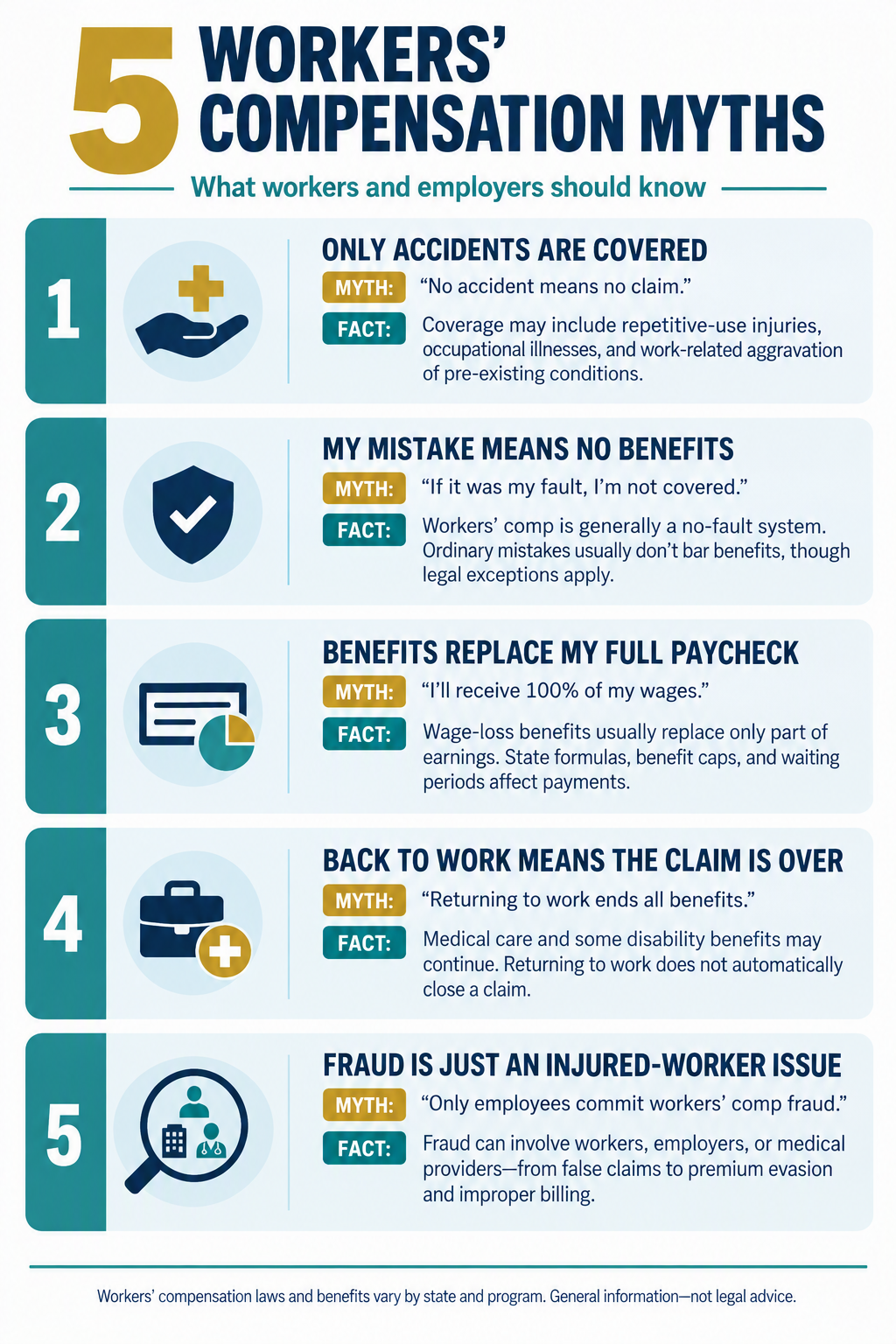
1. "Workers' Compensation Only Covers Accidents"
Reality: Workers' compensation covers much more than sudden accidents.
Covered claims may include:
- Repetitive trauma injuries (carpal tunnel syndrome, tendonitis)
- Occupational diseases (asbestos-related illnesses, silicosis)
- Hearing loss
- Certain mental health injuries, depending on the jurisdiction
- Aggravation of pre-existing conditions
Why this misconception exists: Most people associate workers' compensation with dramatic workplace accidents rather than injuries that develop over time.
Content angle: "You Don't Need a Workplace Accident to Have a Workers' Comp Claim."
2. "If the Injury Was My Fault, I Can't Collect Benefits"
Reality: Workers' compensation is generally a no-fault system.
In most states:
- Employee negligence usually does not prevent recovery.
- Benefits are available even if the worker made a mistake.
- The focus is on whether the injury arose out of employment, not who caused it.
Exceptions may include:
- Intoxication
- Intentional self-harm
- Serious misconduct in some jurisdictions
Why this misconception exists: People confuse workers' compensation with personal injury lawsuits, where fault often matters.
Content angle: "You Can Make a Mistake and Still Be Covered."
3. "Workers' Compensation Pays Full Wages While I'm Out"
Reality: Most injured workers receive only a percentage of lost wages.
Typical temporary disability benefits range from:
- About 60% to 80% of average weekly wages, depending on state law
- Subject to minimum and maximum benefit rates
Many workers are surprised by:
- Waiting periods
- Benefit caps
- Differences between gross and net income
Why this misconception exists: Employees often assume income replacement means dollar-for-dollar replacement.
Content angle: "The Biggest Financial Surprise After a Workplace Injury."
4. "Once My Doctor Releases Me, the Claim Is Over"
Reality: Medical treatment and benefits may continue even after a return to work.
Possible ongoing issues include:
- Permanent impairment ratings
- Future medical benefits
- Vocational rehabilitation
- Permanent partial disability awards
- Claim settlements
Many claims remain active long after the employee resumes work.
Why this misconception exists: People assume returning to work and claim closure happen simultaneously.
Content angle: "Back at Work Doesn't Always Mean the Claim Is Finished."
5. "Workers' Compensation Is Full of Fraud by Injured Workers"
Reality: Fraud exists, but it is a relatively small portion of overall claims costs.
Claims professionals routinely identify:
- Employee fraud
- Employer premium fraud
- Provider billing fraud
- Medical treatment fraud
Research consistently shows that the vast majority of injured workers have legitimate claims.
Why this misconception exists: Fraud cases receive disproportionate media attention while ordinary claims rarely make headlines.
Content angle: "The Truth About Workers' Compensation Fraud."
Bonus Misconception for Industry Professionals
"Workers' Compensation Is Just About Medical Costs."
In reality, workers' compensation affects:
- Employee retention
- Return-to-work outcomes
- Productivity
- Experience modification factors (E-Mods)
- Insurance premiums
- Litigation exposure
- Workplace culture
This misconception is particularly common among employers who focus only on claim costs rather than total organizational impact.


AI best practices california case file caselaw case management case management focus claims compensability compliance compliance corner courts do you know the rule employers exclusive remedy florida fraud glossary check Healthcare hr homeroom insurance insurers iowa kentucky leadership NCCI new jersey new york ohio pennsylvania Safety safety at work state info tech technology the case manager violence WDYT what do you think women's history women's history month workers' comp 101 workers' recovery Workplace Safety Workplace Violence
Read Also
About The Author
About The Author
- WorkersCompensation.com
More by This Author
- Nov 25, 2026
- WorkersCompensation.com
- Nov 25, 2026
- WorkersCompensation.com
- Nov 22, 2026
- WorkersCompensation.com
Read More
- Nov 22, 2026
- WorkersCompensation.com
- Nov 21, 2026
- WorkersCompensation.com
- Nov 19, 2026
- NCCI
- Nov 19, 2026
- WorkersCompensation.com
- Nov 19, 2026
- WorkersCompensation.com
- Nov 18, 2026
- WorkersCompensation.com