


Share This Article:
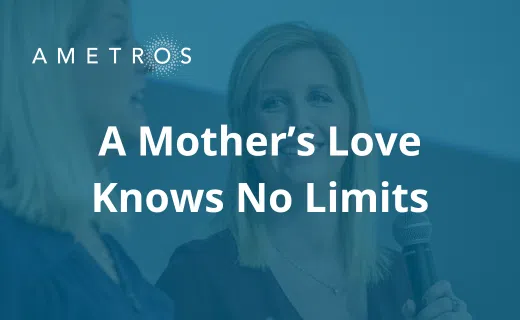
Ametros
The life-altering impact of a catastrophic workplace injury is felt far beyond the injured worker
On April 19, 2013, Lauren Murphy was a vibrant, independent 25-year-old living in Manhattan. She had just been sent to Los Angeles for a work trip, and while there, she decided to go for an early morning run. With no time to react, Lauren was hit by a Mercedes Benz going 45 miles an hour. She was flung in the air, landing headfirst onto the car’s windshield before being catapulted 30 feet into the middle of Hollywood Blvd.
In an instant, Lauren’s life – and the life of her mother, Colleen – changed forever.
Nearly 2,000 miles away, Colleen was in St. Louis, Lauren’s hometown, at the time of the accident. She had left work a little early that day to attend one of her other daughter’s soccer games. While driving down the freeway, she received a call from an unknown number. When she picked up, the detective on the other end asked if she knew Lauren Murphy.
After a short conversation with the detective that left her few details and much panic, Colleen was able to reach a social worker at Cedars-Sinai Medical Center, the hospital where Lauren had been taken. It was during this conversation that her worst fears were confirmed – Lauren had suffered a serious head injury and had a very slim chance of survival. If she did survive, she would likely live in a semi-vegetative state for the rest of her life. Despite the odds being against her, Colleen refused to believe that Lauren wouldn’t recover and go on to live a normal life.
With fight-or-flight mode in full effect, she headed to the airport with her husband, leaving her eldest daughter in charge of her five siblings still living at home.
The next six weeks were a blur. Sleepless nights, multiple surgeries, and many unknowns. To keep Lauren alive, her doctors had to remove a large portion of her brain’s frontal and temporal lobes, both of which are crucial for language and memory. While no one really knew if or how well Lauren would recover, it seemed everyone agreed on one thing – it would be a long, arduous journey ahead.
After six weeks at Cedars-Sinai, Lauren was airlifted to the Rehabilitation Institute of Chicago. At this point, she was no longer considered in critical condition; however, she had very low brain activity. She couldn’t walk, talk, or eat on her own. She was bedridden with only the ability to breathe and open her eyes. Despite not really knowing how to help Lauren during this difficult time, Colleen never lost hope and she never left Lauren’s side.
By the end of Lauren’s time in Chicago, one thing was certain; not only had Lauren’s life changed but so had Colleen’s. A working mom with a full-time professional job in healthcare, Colleen knew she wasn’t going to be able to go back to work. She loved her job, but she loved her daughter more. Colleen had a new job now – and that was to take care of Lauren. And so, the journey to their ‘new normal’ began.
Finding Their New Normal
After four months of being away from home, Colleen and Lauren left Chicago and returned home. By this time, Lauren was learning to walk again, but her balance was terrible. Her brain injury also left her right arm immobile, so she couldn’t use a walker. This meant Colleen had to walk behind her or use a wheelchair.
Even more challenging was Lauren’s inability to communicate with Colleen. She was almost entirely non-verbal, and any words she did speak were jumbled.
Colleen recalls, “Lauren couldn’t tell me how she was feeling. She couldn’t order her own food. She couldn’t tell me she was hungry. She couldn’t really tell me anything.”
This continued for the next two years as Colleen cared for Lauren around the clock.
As time went on, Lauren’s brain began working hard to make new connections. All this new brain activity was progress, but it also came with a lot of confusion for Lauren. Colleen remembers sleepless nights, waking up to Lauren doing odd things at 2 a.m., like putting on clothes and high heels as if she were going to work.
Despite this challenging behavior, Lauren continued to make progress. and she finally started to regain some ability to communicate. She and Colleen spent time together in St. Petersburg, Florida at The Aphasia Center where Lauren worked on her communication skills. From there, Colleen realized it was time for Lauren to learn how to live more independently again. This meant making a long-term commitment to attend a brain injury facility in Omaha.
All in all, over the course of Lauren’s first two years post-injury, Colleen spent 404 days away from her family in St. Louis – just one of the many sacrifices she made in her unwavering dedication to Lauren’s recovery.
Much-Needed Relief for Colleen
Being Lauren’s caregiver was – and still is – a full-time job. While some days are easier than others, Colleen’s labor of love is tiring.
Luckily, Colleen has had great partners along the way – her adult children, her husband, her parish, her community, and many healthcare and workers’ compensation partners.
One such partner is Ametros, who was there to relieve some of the weight off Colleen’s shoulders. About eight years after Lauren’s accident, her workers’ compensation case was finally settled. This meant all her doctor’s appointments – and the corresponding funding – would no longer be covered by the workers’ compensation system.
With countless day-to-day responsibilities, Colleen’s couldn’t imagine taking on anything else. That’s when Ametros stepped in. The Ametros team provided hands-on support and expertise, seamlessly managing the responsibilities once handled by Lauren’s workers’ compensation insurance company, and giving Colleen the relief and confidence she needed.
Today, Ametros continues to manage the bills and paperwork surrounding Lauren’s medical treatments – and there is a lot.
If she ever runs into any problems with prescriptions or coverage, according to Colleen, “Ametros just steps in and handles it.”
She went on to say “I have so much my plate with Lauren. I don’t want to have to fight every day just to get her what she needs at the doctor. I don’t want to file paperwork that goes to the government for Medicare set-aside. And the beauty of it is, I don’t have to. In fact, I don’t even think about it. I know Ametros is handling everything behind the scenes for me.”
Thriving in Their New Normal
With the worst behind them – and great partners by their side – today, Lauren and Colleen are thriving. While Lauren will never go back to the life she had pre-injury, she and Colleen have much to be thankful for. According to Lauren’s doctors, she is “true miracle.”
Lauren once again has full use of her right arm, and not only is she walking, she’s running. She gets ready every morning independently and can make herself basic things to eat, such as sandwiches.
Today, she and Colleen travel the country together telling their story and encouraging others to find hope by staying true to five key principles that helped them throughout their journey:
- Show up
- Find your cheerleader
- Kindness is free
- Work hard
- Never give up
But despite all her incredible progress over the years, she will always be dependent on Colleen. Lauren’s brain injury left her with aphasia, which means she has difficulty finding words, forming sentences, or understanding conversations. In addition, her brain injury resulted in obsessive compulsive disorder and seizures. This means she can’t drive or live on her own.
Colleen is her caregiver, but she is also her mother, and their bond is stronger than ever. They love to shop (especially Nordstrom), watch Hallmark movies, tell their story, and just like all mothers and daughters, they even fight.
While a workplace injury changed the direction of both of their lives forever, Colleen never lost hope. Thirteen years later, she is thankful for the gift she’s been given.
“I look at it like this – how many moms get the opportunity to raise their children twice? I’m lucky – I got a do over.”
*While this story focuses on the special bond between mother and daughter, it’s important to appreciate just how much a catastrophic workplace injury affects the entire family. Throughout Lauren’s journey, her entire family made sacrifices and life changes in their dedication to her recovery and success.


AI best practices california case file caselaw case management case management focus claims compensability compliance compliance corner courts do you know the rule employers exclusive remedy florida fraud glossary check Healthcare hr homeroom insurance insurers iowa kentucky leadership NCCI new jersey new york ohio pennsylvania Safety safety at work state info tech technology the case manager violence WDYT what do you think women's history women's history month workers' comp 101 workers' recovery Workplace Safety Workplace Violence
Read Also
- Oct 10, 2026
- WorkersCompensation.com
- Oct 10, 2026
- WorkersCompensation.com
- Oct 10, 2026
- WorkersCompensation.com
About The Author
About The Author
- WorkersCompensation.com
More by This Author
- Oct 11, 2026
- WorkersCompensation.com
- Oct 10, 2026
- WorkersCompensation.com
- Oct 10, 2026
- WorkersCompensation.com
Read More
- Oct 10, 2026
- WorkersCompensation.com
- Oct 10, 2026
- WorkersCompensation.com
- Oct 10, 2026
- WorkersCompensation.com
- Oct 08, 2026
- James Benham
- Oct 06, 2026
- NCCI
- Oct 05, 2026
- Thea Nanton-Persaud