


Share This Article:
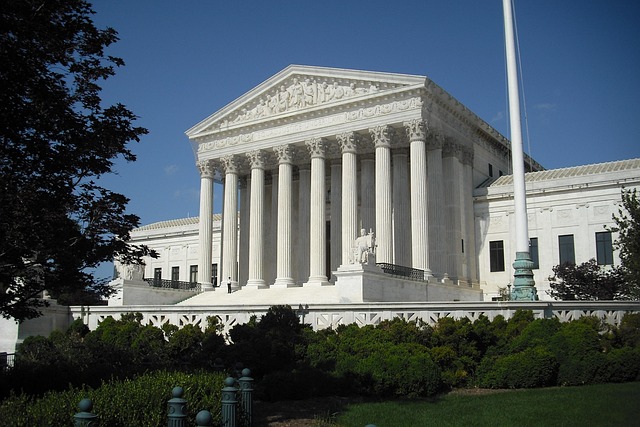
SCOTUS to Decide if Workers Claiming Injury by Weedkiller will Have Day in Court
10 Feb, 2026 Chriss Swaney
Safety at Work
The U.S. Supreme Court last week said it would decide whether thousands of workers claiming the pesticide Roundup caused their cancer will have a day in court to plead their cases, or whether a federal law that regulates pesticide labeling will effectively block their case from moving forward.
Experts argue that the court’s decision to hear the case has significant implications for agriculture – which heavily relies on the product – and Americans who claim Monsanto (now owned by German-based Bayer since 2018) violated various laws by failing to warn them about a risk of cancer.
Bayer, a German conglomerate, is petitioning the court for a definitive ruling on whether a federal law shields the company from thousands of lawsuits claiming that its widely used weedkiller Roundup causes cancer. The court will hear arguments this spring.
“The Supreme Court’s decision to hear Durnell v. Monsanto is a troubling development, signaling that the Court may be prepared to side with giant chemical companies like Bayer in not allowing states to include warning labels on products that are proven to be harmful to human health,” said Chellie Pingree, a Democratic congresswoman from Maine who helped to defeat a separate measure, a provision in a House spending bill, that could have shielded Bayer from lawsuits. “It’s clear that Bayer – with the full-throated support of the Trump Administration will do anything to protect their profits and avoid accountability,’’ said Pingree.
“It’s all about people worrying about their own health and their children’s health,’’ said Pingree.
Now, a broad coalition is asking why the Trump Administration is siding with the pesticide maker over American plaintiffs.
Bayer’s Supreme Court petition is the latest chapter in a yearslong controversy over Roundup, developed by Monsanto in the 1970s as a revolutionary weedkiller. The American Farm Bureau in a filing to the Supreme Court said that glyphosate, Roundup’s active ingredient, was used on 30 million acres of farmland growing cotton, soybean, sugar beets and more. It warned that without glyphosate food yields would “drop precipitously.’’
But a growing body of evidence in lab animals and more limited evidence in humans has indicated a link to cancer, including non-Hodgkin lymphoma. In 2015, the World Health Organization’s International Agency For Research in Cancer found that the herbicide was “probably carcinogenic.’’
Still , the Environmental Protection Agency (EPA) does not classify glyphosate as a carcinogen and has repeatedly approved Roundup’s product labeling, which does not carry a cancer warning.
Against that backdrop of ongoing drama, thousands of lawsuits from farm workers, gardeners, landscapers and others that under state law Bayer should have notified users of potential risk to cancer by affixing warning labels to Roundup bottles and drums.
“I don’t use it anymore in my garden,’’ said Billy White of Wheeling W.Va. “It should be taken off the market; it is unsafe,’’ said White.
“I guess we all should be wondering if federal law should be shielding Bayer from cancer lawsuits.’’ quipped White, a retired school teacher.
Bayer’s court petition is based on a case brought by John Durnell, a resident of St. Louis and an avid gardener who used roundup for decades. Durnell received a diagnosis of nonHodgkin lymphoma and sued Monsanto in 2019, alleging his illness was a direct result of exposure to Roundup and that Monsanto had failed to warn of the cancer risks.
Bayer has paid out more than $10 billion to settle approximately 100,000 Roundup claims and faces thousands more. Republicans in Congress have vowed to bring back a measure to shield Bayer in a 2026 Farm Bill and industry groups have successfully lobbied for immunity laws in states such as Georgia and North Dakota.


AI california case file caselaw case management case management focus claims compensability compliance compliance corner courts covid do you know the rule employers exclusive remedy florida fraud glossary check Healthcare hr homeroom insurance insurers iowa kentucky leadership NCCI new jersey new york ohio pennsylvania roadmap Safety safety at work state info tech technology violence WDYT what do you think women's history women's history month workers' comp 101 workers' recovery Workplace Safety Workplace Violence
Read Also
- Apr 01, 2026
- Claire Muselman
- Apr 01, 2026
- Frank Ferreri
About The Author
About The Author
-
Chriss Swaney
Chriss Swaney is a freelance reporter who has written for Antique Trader Magazine, Reuters, The New York Times, U.S. News & World Report, the Burlington Free Press, UPI, The Tribune-Review and the Daily Record.
More by This Author
Read More
- Apr 01, 2026
- Claire Muselman
- Apr 01, 2026
- Frank Ferreri
- Mar 30, 2026
- Chris Parker
- Mar 30, 2026
- Frank Ferreri
- Mar 30, 2026
- Chriss Swaney
- Mar 30, 2026
- Chris Parker