


Share This Article:
What Do You Think?
In Ohio, as in many states, employees cannot obtain workers’ compensation benefits if their intoxication caused them to get injured. A case involving a vacuum packaging line associate who got his glove caught in a conveyor belt highlights the role that expert testimony and drug tests can play during disputes over compensability.
It was around 8 p.m. when the claimant’s glove got caught under a conveyor belt. He suffered injuries which later resulted in parts of his fingers and palms having to be amputated.
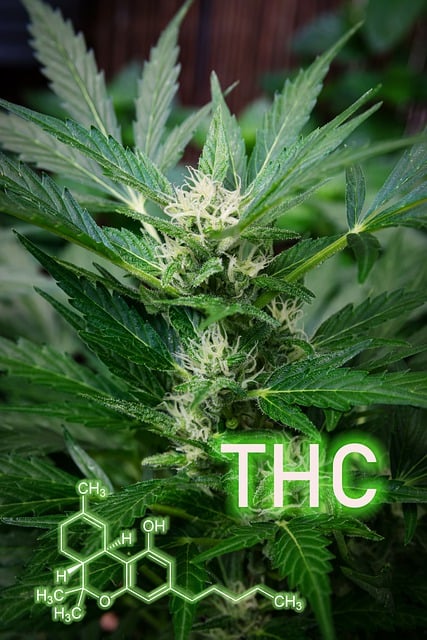
After the accident, he went to the hospital and, around 10:22 p.m., a drug test showed that he had a high amount of THC in his system. He didn’t have a prescription for THC.
The employer refused to pay the claim on the basis that the claimant was intoxicated and that’s why he was injured. In court, it presented an expert who stated that the “very high” level of THC in the claimant’s system caused him to be impaired with respect to his judgement, concentration, and reaction time, which caused the accident. The claimant argued the test wasn’t valid because when he arrived at the hospital, and prior to taking the test, he was given opioids.
An employee is not entitled to compensation for a work injury if it was caused by being under the influence of a controlled substance which was not prescribed by a physician.
Could the claimant recover benefits?
A. No. He didn’t have a prescription for the THC, and he apparently was injured because of his diminished focus and reaction time.
B. Yes. The test wasn’t valid because it was administered after the hospital medicated him.
For information on how the "intoxication defense" works around the country, head to Simply Research.
If you selected A, you agreed with the court in Rosario v. Fresh Mark, Inc., No. No. 2025-CA-00076. (Ohio Ct. App. 01/29/26), which found that the claimant’s intoxication barred him from recovering benefits.
First, the employer established that the claimant was under the influence, based on the test. That test was performed within a short time of the injury and showed a high level of THC in the claimant’s system. Further, the claimant lacked a prescription for the drug.
Second, via expert testimony, the employer demonstrated that the claimant’s intoxication caused his injury. As to the validity of the test, the claimant pointed to the other medication he was given, but provided no evidence that the medication would have altered the test results.
The court affirmed the denial of the claim.


AI california case file caselaw case management case management focus claims compensability compliance compliance corner courts covid do you know the rule employers exclusive remedy florida fraud glossary check Healthcare hr homeroom insurance insurers iowa kentucky leadership NCCI new jersey new york ohio pennsylvania roadmap Safety safety at work state info tech technology violence WDYT what do you think women's history women's history month workers' comp 101 workers' recovery Workplace Safety Workplace Violence
Read Also
About The Author
About The Author
- Chris Parker
More by This Author
Read More
- Apr 02, 2026
- Frank Ferreri
- Apr 01, 2026
- Claire Muselman
- Apr 01, 2026
- Frank Ferreri
- Mar 30, 2026
- Chris Parker
- Mar 30, 2026
- Frank Ferreri
- Mar 30, 2026
- Chriss Swaney