


Share This Article:
We are about to get raw, literally and physically. Years ago, when I testified before the State about some of the dangers of physician-dispensed medications, I believed it would help resolve the problem. However, I continue to hear about ongoing issues, and as I have previously mentioned, we must do better in this industry. This responsibility extends to everyone involved in the recovery journey of injured workers.
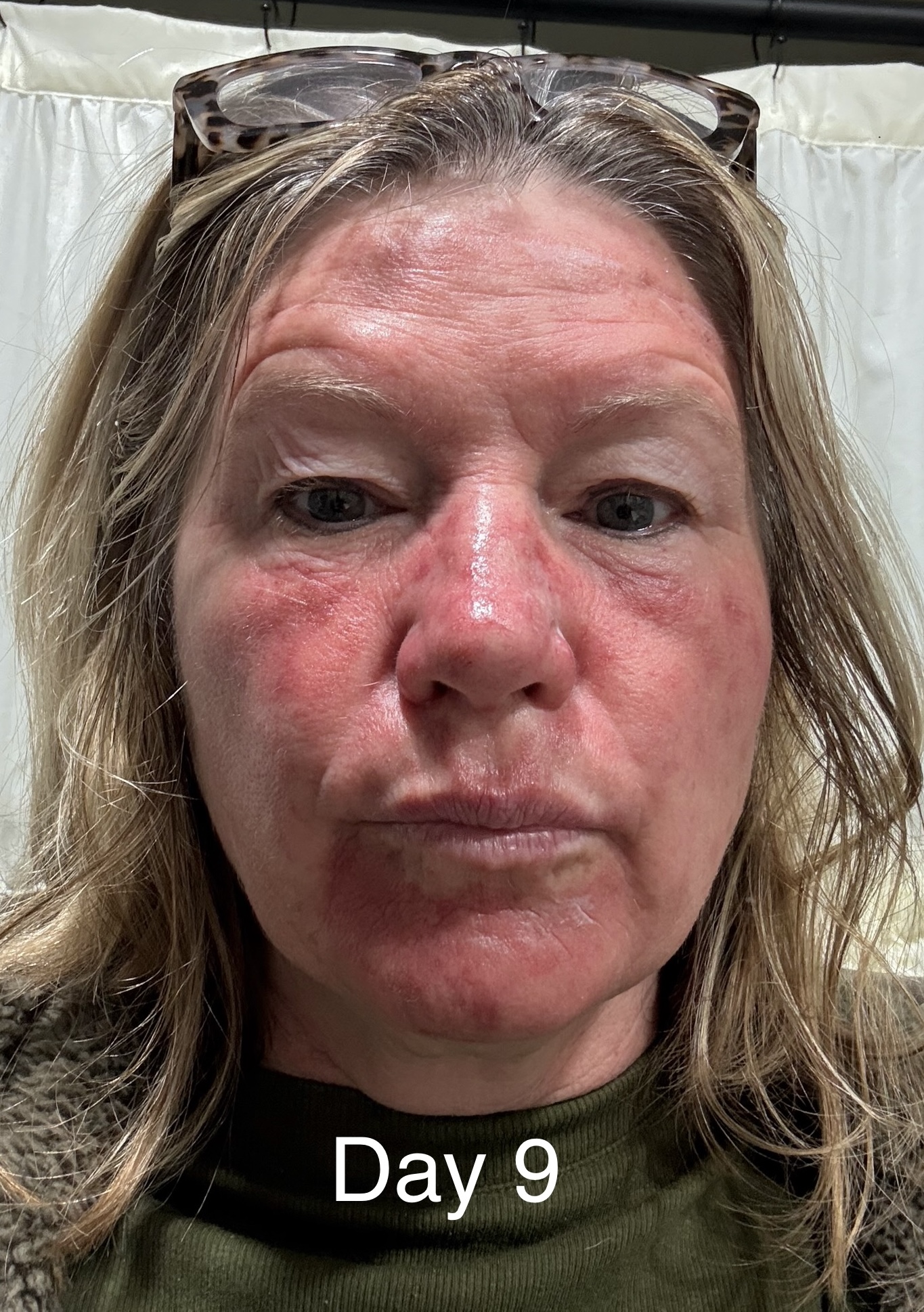
A recent personal experience reignited my commitment to making things safer for injured workers. Last month, I was prescribed Fluorouracil 5% to treat some cancerous cells on my face. Fluorouracil, also known as 5-FU, is a chemotherapy agent used to treat pre-cancerous cells, minor skin cancers, and actinic keratosis. Although my prescribed treatment was for 10 days, it can last up to 14 days. By day 9, I was experiencing excruciating pain, and my face was red and raw. As a Florida native, I expected some damage, but the severity of my condition was alarming, as evidenced by the attached photos. The photo I shared is raw and was hard for me to share, but I want you to see the swelling and pain I experienced so that you get it.
While my journey is not typical of an injured worker, it underscores a broader issue. During my tenure at Publix, I had the privilege of working with myMatrixx as our Pharmacy Benefit Manager (PBM), and we developed a strong partnership. Collaborating with clinicians like Phil and Alan, we learned that physician dispensing often bypasses the typical PBM pathway, making our teamwork crucial. Being a clinician myself, we developed an amazing working relationship that I still cherish to this day.
We scrutinized the physician dispensing program and medications, and one of the costly creams frequently dispensed was Diclofenac 3%. Initially, I believed it was a safe topical Non-Steroidal Anti-Inflammatory Drug (NSAID), but I soon realized that at 3% strength, it could cause severe reactions similar to what I experienced. Diclofenac 1% is a topical NSAID pain relief cream, but at 3%, it is not intended for pain treatment. The 3% formulation, known as Solaraze, is used to treat sun-damaged skin, actinic keratosis, and pre-cancerous cells.
Common side effects of Solaraze include redness, itching, dryness, and scaling of the skin. These reactions can be quite uncomfortable and may deter patients from continuing the treatment. In some cases, the irritation can become severe, leading to raw, burning skin and the development of rashes. This is particularly concerning for individuals with pre-existing sun damage, as the medication can exacerbate these conditions.
Are you following me here: if injured workers use the cream as prescribed and have any sun damage, they could experience raw, burning skin and report rashes to their physicians. You are spending thousands of dollars on a cream that is typically safe but not intended for pain relief at 3% strength. There are two critical issues to consider: firstly, the prescribing practices of the physicians, and secondly, the adherence of injured workers to their prescribed medications. I contacted a reputable orthopedic surgeon who was prescribing this cream and explained the issue. She was astonished and immediately changed her practice, realizing she had been misled by the familiarity of the medication.
The safety of injured workers is paramount, and it is our collective responsibility to ensure their well-being throughout their recovery journey. As professionals in this industry, we must be vigilant and proactive in identifying potential risks and mitigating them. By doing so, we not only protect the health and safety of injured workers but also uphold the integrity and trust in our profession.
Working closely with Pharmacy Benefit Managers (PBMs) or other pharmacy specialists is essential in identifying and addressing safety issues with medications. These professionals have the expertise to analyze medication usage patterns, detect potential risks, and recommend safer alternatives. By leveraging their knowledge and collaborating effectively, we can ensure that injured workers receive the most appropriate and safe treatments, ultimately enhancing their recovery process.
I was under the impression that this issue had been resolved, as I testified about this specific medication five years ago. However, I recently reviewed some notes and discovered that it is still being prescribed. I am not suggesting that we deny these medications, nor am I advising physicians to prescribe or avoid specific strengths. Instead, I urge all stakeholders—Physicians, Nurses, Adjusters, Attorneys, PBMs, and other vendors—to monitor these medications closely and engage in open conversations. By working together, we can create a safer environment for injured workers and ensure they receive the best possible care.
Niki Moore is a seasoned workers' compensation professional with over 20 years of experience, ranging from managing complex cases at the desk to overseeing operations at the management level. She has extensive expertise in all aspects of the workers' compensation delivery model and is adept at addressing issues that drive impactful results.


AI california case file caselaw case management case management focus claims compensability compliance compliance corner courts covid do you know the rule employers exclusive remedy florida fraud glossary check Healthcare hr homeroom insurance insurers iowa kentucky leadership NCCI new jersey new york ohio pennsylvania roadmap Safety safety at work state info tech technology violence WDYT what do you think women's history women's history month workers' comp 101 workers' recovery Workplace Safety Workplace Violence
Read Also
About The Author
About The Author
- Niki Moore Simmons
More by This Author
Read More
- Mar 26, 2026
- Edward Stern
- Mar 24, 2026
- Niki Moore Simmons
- Mar 20, 2026
- NCCI
- Mar 20, 2026
- James Benham
- Mar 17, 2026
- Dennis Sponer