


Share This Article:
Opportunity or Threat: An Employer’s Immediate Request for Bodily Fluids in Compensation Claims
03 Feb, 2026 Brandon Hornsby Wilson
Introduction:
Steve Jobs said, “Innovation is the ability to see change as an opportunity, not a threat.” Every day, new ideas are proffered for the progression of society. However, there must be checks and balances to determine whether this innovation is opportunity or threat. In our present scenario, an employee is injured in a work-related incident, prompting care at a hospital. The hospital administers care to the patient and a few days later the employer requests a hearing and subpoenas the hospital seeking the retention and overall production of biological information such as blood and urine.
At the time of the subpoena, it is unclear whether the biological material exists. Furthermore, the employer then requests the hospital send these biological specimens to a third-party drug testing facility. The Employer requests these samples to gather evidence for a defense under O.C.G.A. § 34-9-17(b) which bars workers’ compensation claims when the Claimant is intoxicated by alcohol, marijuana, or other controlled substance not prescribed by a doctor.
Points of Interest
Can an Employer Request a Hearing Against a Non-Party?
The hospital is not a party to the litigation, meaning it does not have the ability to file motions or responses into the claim. ICMS, the State Board of Workers’ Compensation’s filing system, restricts access to parties and parties of interest. As the hospital is not a party, there is no access to ICMS, full stop.
Another question may be, could the hospital be a party of interest? O.C.G.A. § 34-9-206(a) lays out the circumstances for which an entity can be a party at interest and limits it to a “group insurance company or other health care provider who covers the costs of medical treatment.” The hospital does not quite fit into this definition, and they are put into a precarious situation.
The hospital is ordered, not by any court or judge but by the employer, to turn over protected biological specimens for a hearing that the employer, not the employee, requested without being able to verify or respond to the inquiry. On the other hand, the employer must act quickly lest the requested samples be destroyed. Is it fair to request a hearing against an entity that cannot respond, or should the request be weighed against the need for biological material? That is a question for the courts.
Can the Samples be Subpoenaed to a Non-Party Without a Release?
As we have discussed, the legality of requesting these biological specimens requires court intervention. However, another point of interest concerns whether the samples can be
subpoenaed to a non-party without a release. In this scenario, these samples are not going to the employer but to a non-party to this litigation for testing. Should the testing entity fall under the umbrella of the employer, or should there be an additional release for the testing agency?
Furthermore, what happens after the samples are tested? Currently, the third-party testing company has carte blanche regarding the specimens. Is there a specimen disposal process? Is the third-party required to dispose of the specimens? How long can they retain the specimens? There is no reason to believe that anything nefarious will be done with the samples…but there are simply no directives or explanations confirming what, if anything, is to be done with the samples after their intended use. Ultimately, this is a point the courts will have to consider.
Is this even practical?
At a glance, retention and production of bodily fluids that the hospital is already testing for seems simple. However, hospitals have retention policies that must be in compliance with multiple state and federal entities and laws. Are the hospitals supposed to overhaul these policies to accommodate the employer’s request? Does the hospital have to incur the additional cost for retaining the specimens? Does the hospital have to pay the cost to deliver the specimens to the third party?
What’s Next?
As you can see, there are a lot of unanswered questions for this issue of first impression. However, the State Board of Workers’ Compensation has agreed to hear arguments on from the hospital and employers proffering their positions. How will the Board unravel this issue of first impression? To that question, I shrug. However, what kind of blog would this be if I did not offer my point of view?
In my opinion, the Court must establish some guidance for healthcare entities and employers requesting this information. The employer should not be able to institute litigation to request this information, but the employer needs to make the request quickly because the hospital will not retain this biological information forever. Also, there needs to be a little bit more information regarding the third-party testing facility. This could be an opportunity for a new law to be created. Overall, I do not think this matter will stop at the Board, as either side will likely appeal the ruling.
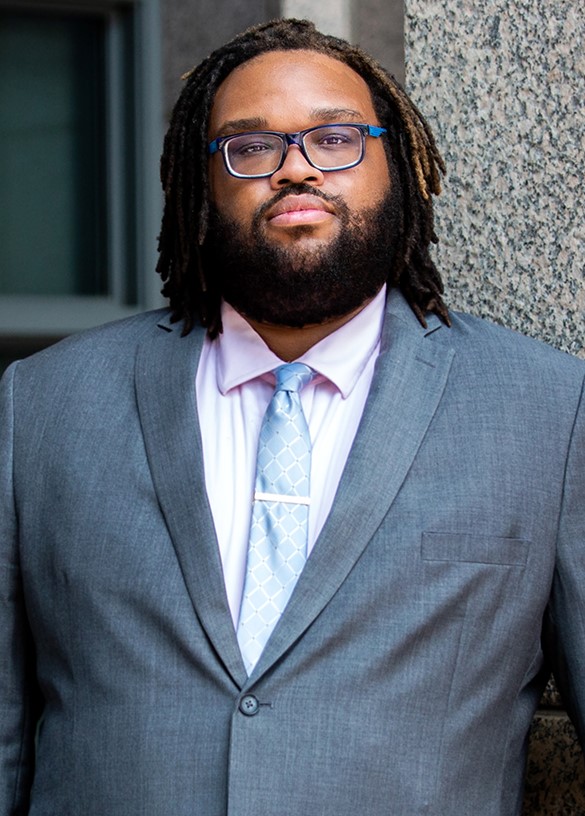
Brandon Wilson is an attorney in the Atlanta office of Hall Booth Smith, where he focuses his practice on workers’ compensation matters. He can be reached at bwilson@hallboothsmith.com.


AI california case file caselaw case management case management focus claims compensability compliance compliance corner courts covid do you know the rule employers exclusive remedy florida glossary check Healthcare hr homeroom insurance insurers iowa leadership medical NCCI new jersey new york ohio pennsylvania roadmap Safety safety at work state info tech technology violence WDYT west virginia what do you think women's history women's history month workers' comp 101 workers' recovery Workplace Safety Workplace Violence
Read Also
- Feb 26, 2026
- NCCI
- Feb 21, 2026
- Dennis Sponer
About The Author
About The Author
- Brandon Hornsby Wilson
Read More
- Feb 26, 2026
- NCCI
- Feb 21, 2026
- Dennis Sponer
- Feb 19, 2026
- NCCI
- Feb 16, 2026
- Dennis Sponer
- Feb 14, 2026
- Amanda Conley Lauren Meadows
- Feb 13, 2026
- NCCI